"From Prompt to Cognitive Engineering." — Turn Prompts into Protocols.
Auditable Reasoning for Production AI | Rust-Native | SSR/SSG Compatible






Most AI is a slot machine. Insert prompt → pull lever → hope for coherence.
ReasonKit is a factory. Input data → execute protocol → get deterministic, auditable output.
LLMs are fundamentally probabilistic. Same prompt → different outputs. This creates critical failures:
| Failure | Impact | Our Solution |
|---|---|---|
| Inconsistency | Unreliable for production | Deterministic protocol execution |
| Hallucination | Dangerous falsehoods | Multi-source triangulation + adversarial critique |
| Opacity | No audit trail | Complete execution tracing with confidence scores |
We don't eliminate probability (impossible). We constrain it through structured protocols that force probabilistic outputs into deterministic execution paths.
- Rust toolchain installed (
curl --proto '=https' --tlsv1.2 -sSf https://sh.rustup.rs | sh) - API key for your preferred LLM provider (e.g.,
OPENAI_API_KEYfor OpenAI) - Optional:
uvfor Python bindings (curl -LsSf https://astral.sh/uv/install.sh | sh)
# Install (Universal)
curl -fsSL https://reasonkit.sh/install | bash

# Or via Cargo
cargo install reasonkit-core

# Run your first analysis
rk-core think --profile balanced "Should we migrate to microservices?"
Note: In v0.1.x, CLI commands other than
mcp,serve-mcp, andcompletionsare scaffolded. The examples below describe the planned interface.
30 seconds to structured reasoning.
- Command not found: Ensure
~/.cargo/binis in your PATH. - API errors: Verify your API key is set and valid.
- Performance issues: Check system resources; ReasonKit targets <5ms latency.
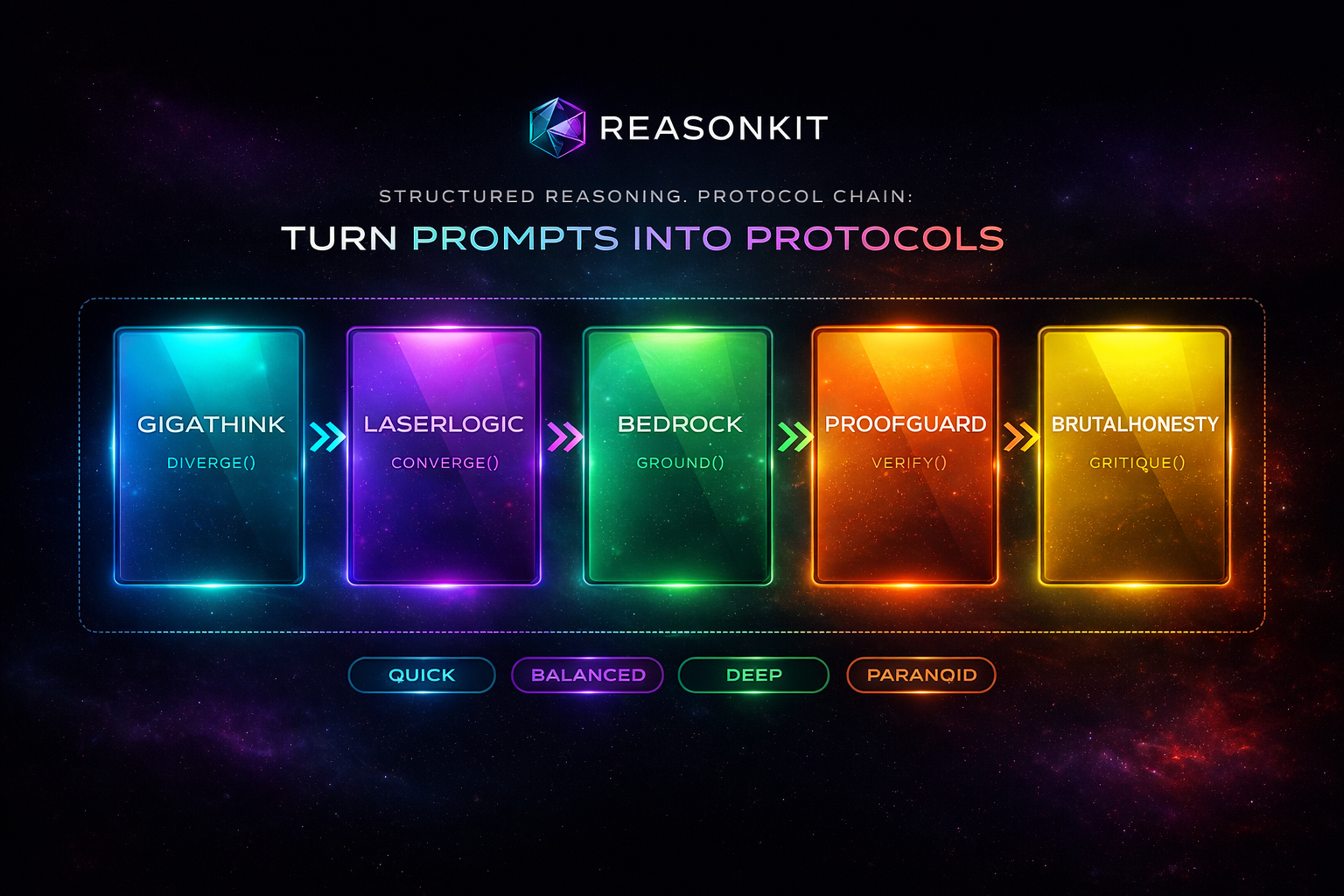
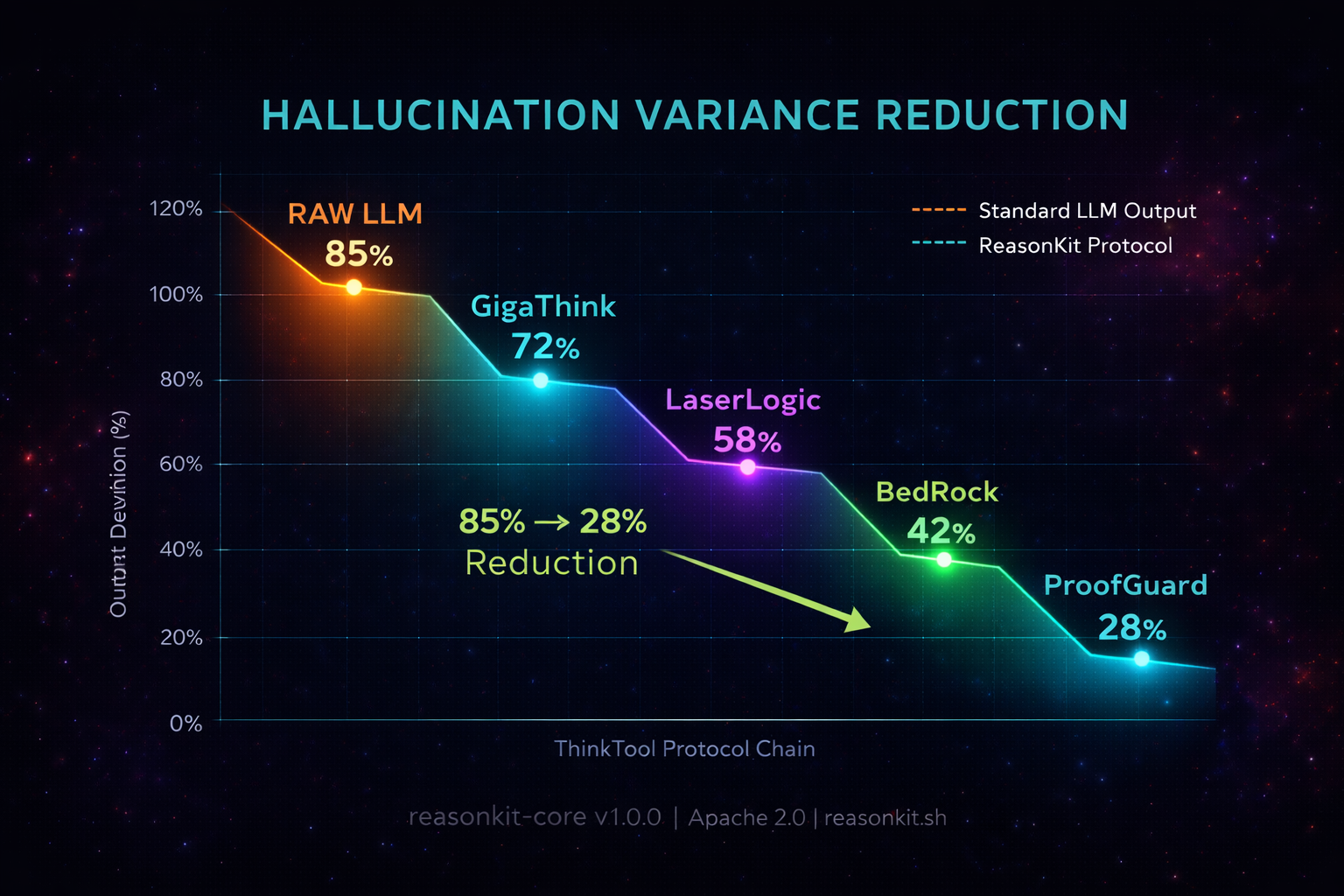
Each ThinkTool acts as a variance reduction filter, transforming probabilistic outputs into increasingly deterministic reasoning paths.

| ThinkTool | Operation | What It Does |
|---|---|---|
| GigaThink | Diverge() |
Generate 10+ perspectives, explore widely |
| LaserLogic | Converge() |
Detect fallacies, validate logic, find gaps |
| BedRock | Ground() |
First principles decomposition, identify axioms |
| ProofGuard | Verify() |
Multi-source triangulation, require 3+ sources |
| BrutalHonesty | Critique() |
Adversarial red team, attack your own reasoning |
Result: Raw LLM variance ~85% → Protocol-constrained variance ~28%
Pre-configured chains for different rigor levels:
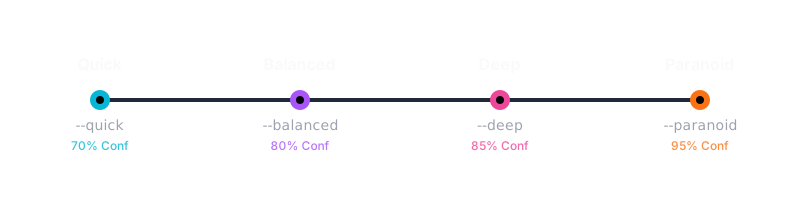
# Fast analysis (70% confidence target)
rk-core think --profile quick "Is this email phishing?"

# Standard analysis (80% confidence target)
rk-core think --profile balanced "Should we use microservices?"

# Thorough analysis (85% confidence target)
rk-core think --profile deep "Design A/B test for feature X"

# Maximum rigor (95% confidence target)
rk-core think --profile paranoid "Validate cryptographic implementation"| Profile | Chain | Confidence | Use Case |
|---|---|---|---|
--quick |
GigaThink → LaserLogic | 70% | Fast sanity checks |
--balanced |
All 5 ThinkTools | 80% | Standard decisions |
--deep |
All 5 + meta-cognition | 85% | Complex problems |
--paranoid |
All 5 + validation pass | 95% | Critical decisions |
flowchart TD
    A[User Input] --> B[Select Profile]
    B --> C[Execute ThinkTool Chain]
    C --> D[Output Result with Confidence]
    D --> E[Log Trace to SQLite]
Standard Operations:
# Balanced analysis (5-step protocol)
rk-core think --profile balanced "Should we migrate our monolith to microservices?"

# Quick sanity check (2-step protocol)
rk-core think --profile quick "Is this email a phishing attempt?"

# Maximum rigor (paranoid mode)
rk-core think --profile paranoid "Validate this cryptographic implementation"

# Scientific method (research & experiments)
rk-core think --profile scientific "Design A/B test for feature X"
With Memory (RAG):
# Ingest documents
rk-core ingest document.pdf

# Query with RAG
rk-core query "What are the key findings in the research papers?"

# View execution traces
rk-core trace list
rk-core trace export <id>Pre-configured chains for different rigor levels:
# Fast analysis (70% confidence target)
rk-core think --profile quick "Is this email phishing?"

# Standard analysis (80% confidence target)
rk-core think --profile balanced "Should we use microservices?"

# Thorough analysis (85% confidence target)
rk-core think --profile deep "Design A/B test for feature X"

# Maximum rigor (95% confidence target)
rk-core think --profile paranoid "Validate cryptographic implementation"| Profile | Chain | Confidence | Use Case |
|---|---|---|---|
--quick |
GigaThink → LaserLogic | 70% | Fast sanity checks |
--balanced |
All 5 ThinkTools | 80% | Standard decisions |
--deep |
All 5 + meta-cognition | 85% | Complex problems |
--paranoid |
All 5 + validation pass | 95% | Critical decisions |
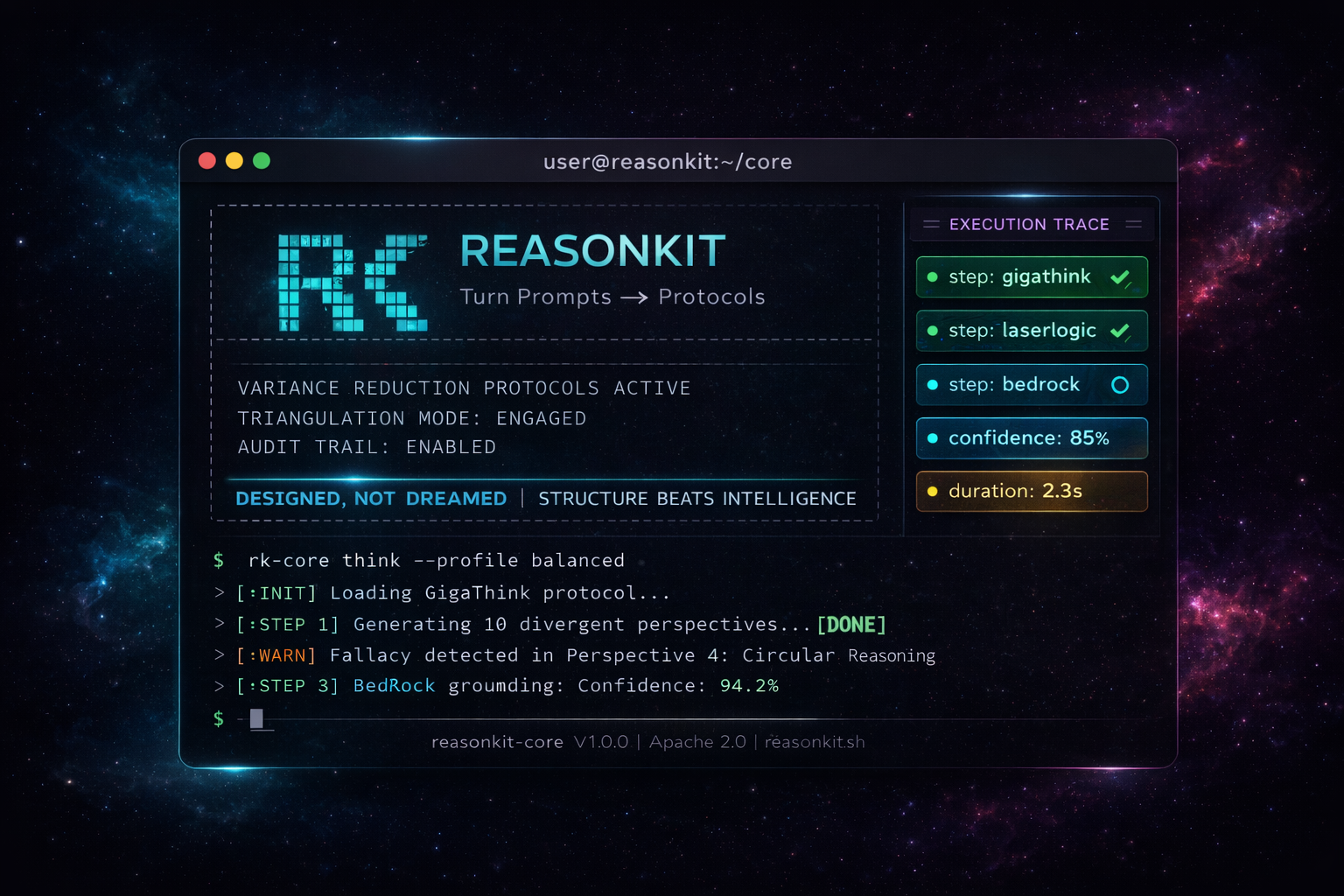
$ rk-core think --profile balanced "Should we migrate to microservices?"

━━━━━━━━━━━━━━━━━━━━━━━━━━━━━━━━━━━━━━━━━━━━━━━━━━━━━━━━━━━━━━━━━━━━━━━━━━━━━━
ThinkTool Chain: GigaThink → LaserLogic → BedRock → ProofGuard
Variance:        85% → 72% → 58% → 42% → 28%
━━━━━━━━━━━━━━━━━━━━━━━━━━━━━━━━━━━━━━━━━━━━━━━━━━━━━━━━━━━━━━━━━━━━━━━━━━━━━━

[GigaThink] 10 PERSPECTIVES GENERATED                         Variance: 85%
  1. OPERATIONAL: Maintenance overhead +40% initially
  2. TEAM TOPOLOGY: Conway's Law - do we have the teams?
  3. COST ANALYSIS: Infrastructure scales non-linearly
  ...
  → Variance after exploration: 72% (-13%)

[LaserLogic] HIDDEN ASSUMPTIONS DETECTED                      Variance: 72%
  ⚠ Assuming network latency is negligible
  ⚠ Assuming team has distributed tracing expertise
  ⚠ Logical gap: No evidence microservices solve stated problem
  → Variance after validation: 58% (-14%)

[BedRock] FIRST PRINCIPLES DECOMPOSITION                      Variance: 58%
  • Axiom: Monoliths are simpler to reason about (empirical)
  • Axiom: Distributed systems introduce partitions (CAP theorem)
  • Gap: Cannot prove maintainability improvement without data
  → Variance after grounding: 42% (-16%)

[ProofGuard] TRIANGULATION RESULT                             Variance: 42%
  • 3/5 sources: Microservices increase complexity initially
  • 2/5 sources: Some teams report success
  • Confidence: 0.72 (MEDIUM) - Mixed evidence
  → Variance after verification: 28% (-14%)

━━━━━━━━━━━━━━━━━━━━━━━━━━━━━━━━━━━━━━━━━━━━━━━━━━━━━━━━━━━━━━━━━━━━━━━━━━━━━━
VERDICT: conditional_yes | Confidence: 87% | Duration: 2.3s
━━━━━━━━━━━━━━━━━━━━━━━━━━━━━━━━━━━━━━━━━━━━━━━━━━━━━━━━━━━━━━━━━━━━━━━━━━━━━━
What This Shows:
- Transparency: See exactly where confidence comes from
- Auditability: Every step logged and verifiable
- Deterministic Path: Same protocol → same execution flow
- Variance Reduction: Quantified uncertainty reduction at each stage
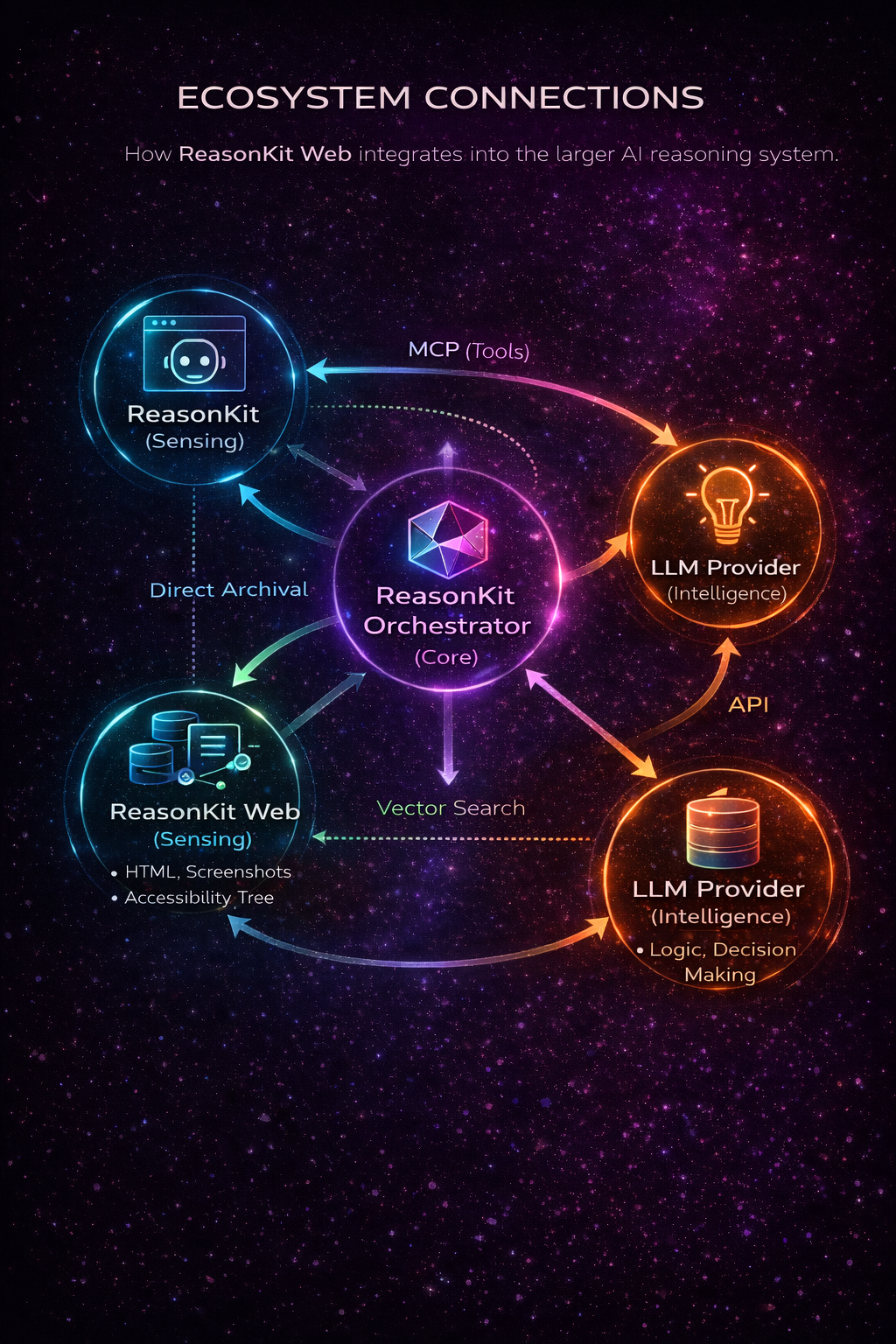
The ReasonKit architecture uses a Protocol Engine wrapper to enforce deterministic execution over probabilistic LLM outputs.
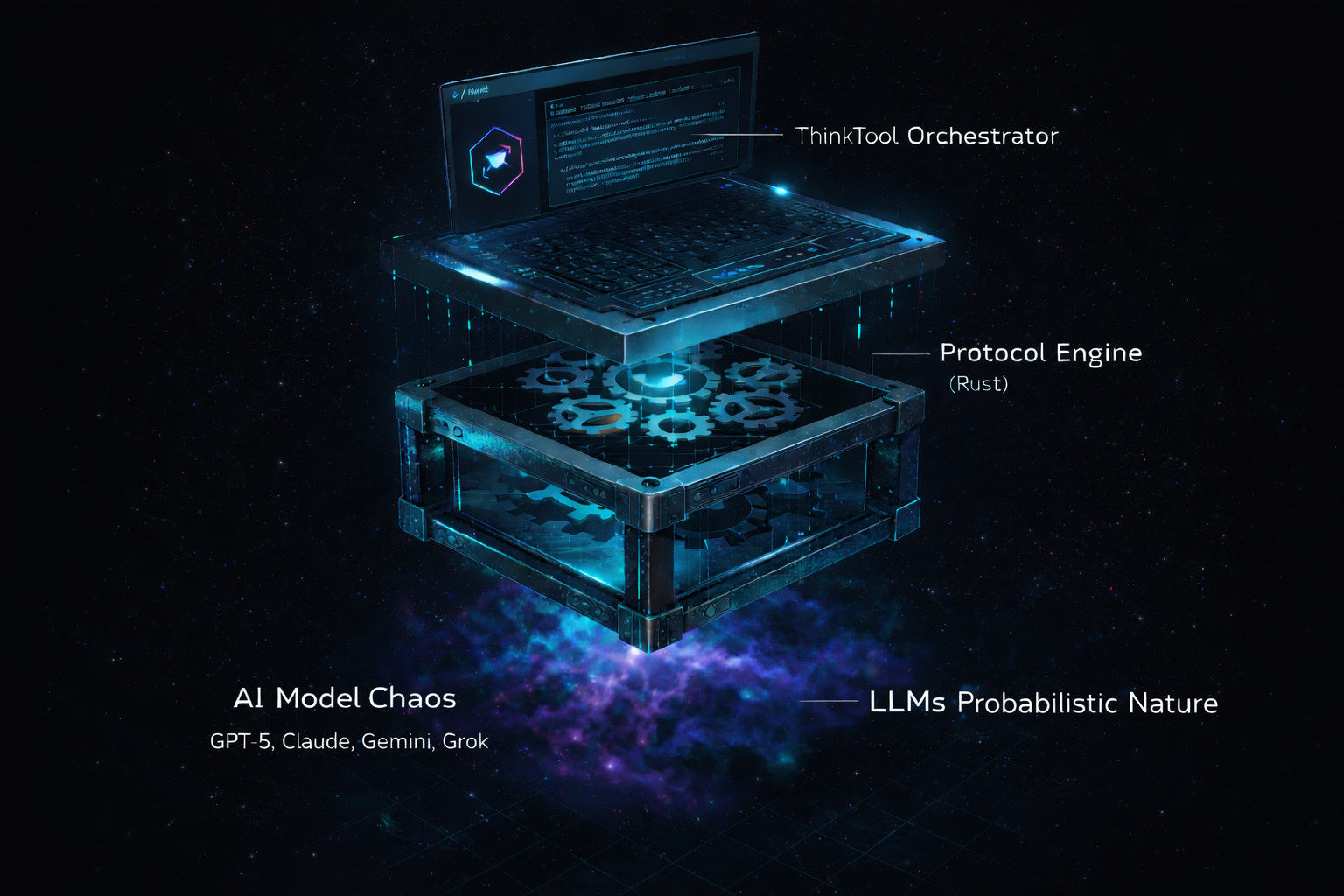
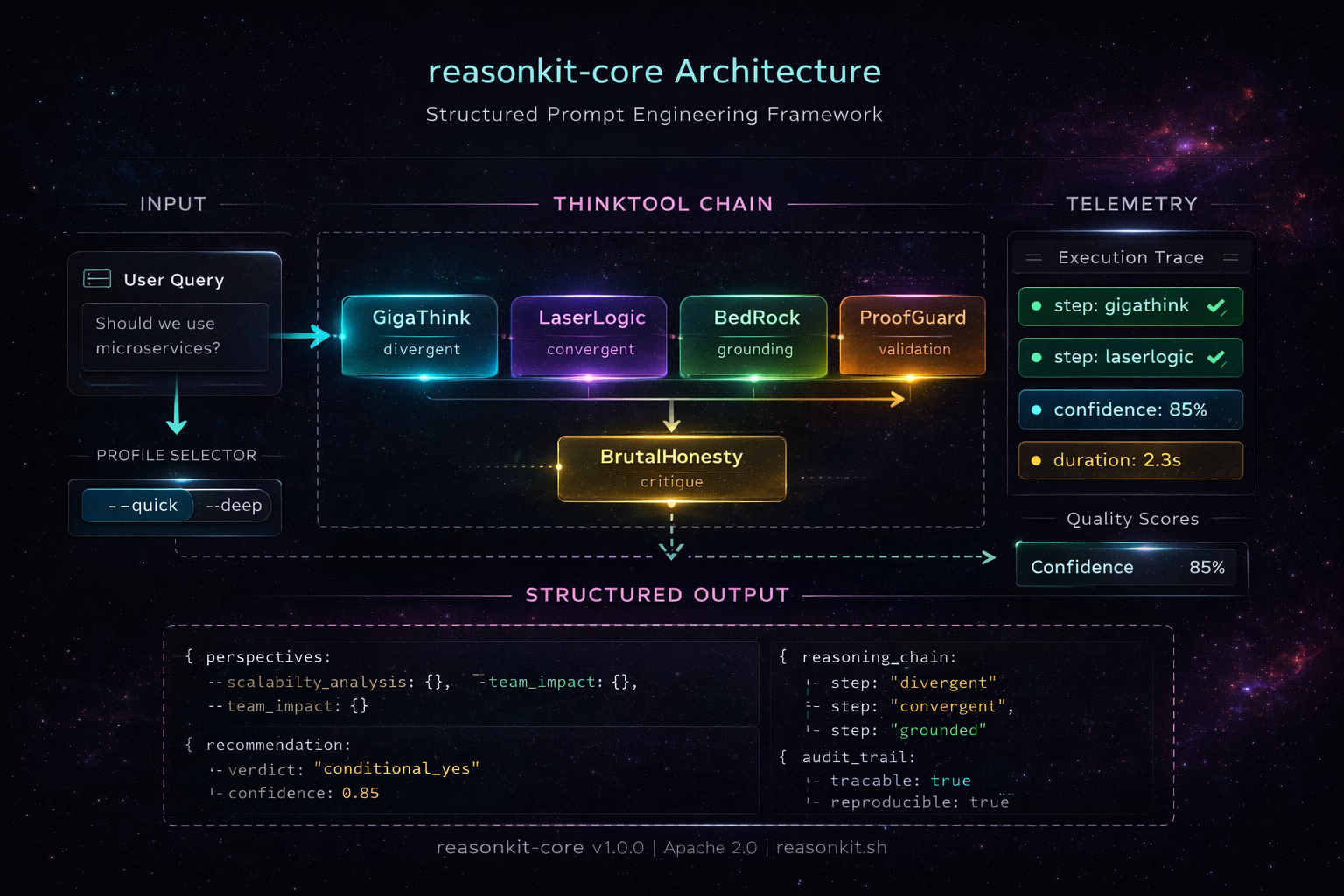
Three-Layer Architecture:
-
Probabilistic LLM (Unavoidable)
- LLMs generate tokens probabilistically
- Same prompt → different outputs
- We cannot eliminate this
-
Deterministic Protocol Engine (Our Innovation)
- Wraps the probabilistic LLM layer
- Enforces strict execution paths
- Validates outputs against schemas
- State machine ensures consistent flow
-
ThinkTool Chain (Variance Reduction)
- Each ThinkTool reduces variance
- Multi-stage validation catches errors
- Confidence scoring quantifies uncertainty
Key Components:
- Protocol Engine: Orchestrates execution with strict state management
- ThinkTools: Modular cognitive operations with defined contracts
- LLM Integration: Unified client (Claude, GPT, Gemini, 18+ providers)
- Telemetry: Local SQLite for execution traces + variance metrics
Architecture (Mermaid Diagram)
flowchart LR
    subgraph CLI["ReasonKit CLI (rk-core)"]
      A[User Command<br/>rk-core think --profile balanced]
    end

    subgraph PROTOCOL["Deterministic Protocol Engine"]
      B1[State Machine<br/>Execution Plan]
      B2[ThinkTool Orchestrator]
      B3[(SQLite Trace DB)]
    end

    subgraph LLM["LLM Layer (Probabilistic)"]
      C1[Provider Router]
      C2[Claude / GPT / Gemini / ...]
    end

    subgraph TOOLS["ThinkTools · Variance Reduction"]
      G["GigaThink<br/>Diverge()"]
      LZ["LaserLogic<br/>Converge()"]
      BR["BedRock<br/>Ground()"]
      PG["ProofGuard<br/>Verify()"]
      BH["BrutalHonesty<br/>Critique()"]
    end

    A --> B1 --> B2 --> G --> LZ --> BR --> PG --> BH --> B3
    B2 --> C1 --> C2 --> B2

    classDef core fill:#030508,stroke:#06b6d4,stroke-width:1px,color:#f9fafb;
    classDef tool fill:#0a0d14,stroke:#10b981,stroke-width:1px,color:#f9fafb;
    classDef llm fill:#111827,stroke:#a855f7,stroke-width:1px,color:#f9fafb;

    class CLI,PROTOCOL core;
    class G,LZ,BR,PG,BH tool;
    class LLM,llm C1,C2;
ReasonKit is written in Rust because reasoning infrastructure demands reliability.
| Capability | What It Means for You |
|---|---|
| Predictable Latency | <5ms orchestration overhead, no GC pauses |
| Memory Safety | Zero crashes from null pointers or buffer overflows |
| Single Binary | Deploy anywhere, no Python environment required |
| Fearless Concurrency | Run 100+ reasoning chains in parallel safely |
| Type Safety | Errors caught at compile time, not runtime |
Benchmarked Performance (view full report):
| Operation | Time | Target |
|---|---|---|
| Protocol orchestration | 4.4ms | <10ms |
| RRF Fusion (100 elements) | 33μs | <5ms |
| Document chunking (10 KB) | 27μs | <5ms |
| RAPTOR tree traversal (1000 nodes) | 33μs | <5ms |
Why This Matters:
Your AI reasoning shouldn't crash in production. It shouldn't pause for garbage collection during critical decisions. It shouldn't require complex environment management to deploy.
ReasonKit's Rust foundation ensures deterministic, auditable execution every time—the same engineering choice trusted by Linux, Cloudflare, Discord, and AWS for their most critical infrastructure.
Memory modules (storage, embedding, retrieval, RAPTOR, indexing) are available in the standalone reasonkit-mem crate.
Enable the memory feature to use these modules:
[dependencies]
reasonkit-core = { version = "0.1", features = ["memory"] }
Features:
- Qdrant vector database (embedded mode)
- Hybrid search (dense + sparse fusion)
- RAPTOR hierarchical retrieval
- Local embeddings (BGE-M3 ONNX)
- BM25 full-text search (Tantivy)
Primary Method (Universal):
curl -fsSL https://reasonkit.sh/install | bashAlternative Methods
# Cargo (Rust) - Recommended for Developers
cargo install reasonkit-core

# From Source (Latest Features)
git clone https://github.com/reasonkit/reasonkit-core
cd reasonkit-core && cargo build --release
Python bindings available via PyO3 (build from source with --features python).
Pre-configured chains for different rigor levels:
# Fast analysis (70% confidence target)
rk-core think --profile quick "Is this email phishing?"

# Standard analysis (80% confidence target)
rk-core think --profile balanced "Should we use microservices?"

# Thorough analysis (85% confidence target)
rk-core think --profile deep "Design A/B test for feature X"

# Maximum rigor (95% confidence target)
rk-core think --profile paranoid "Validate cryptographic implementation"| Profile | Chain | Confidence | Use Case |
|---|---|---|---|
--quick |
GigaThink → LaserLogic | 70% | Fast sanity checks |
--balanced |
All 5 ThinkTools | 80% | Standard decisions |
--deep |
All 5 + meta-cognition | 85% | Complex problems |
--paranoid |
All 5 + validation pass | 95% | Critical decisions |
flowchart TD
    A[User Input] --> B[Select Profile]
    B --> C[Execute ThinkTool Chain]
    C --> D[Output Result with Confidence]
    D --> E[Log Trace to SQLite]
Standard Operations:
# Balanced analysis (5-step protocol)
rk-core think --profile balanced "Should we migrate our monolith to microservices?"

# Quick sanity check (2-step protocol)
rk-core think --profile quick "Is this email a phishing attempt?"

# Maximum rigor (paranoid mode)
rk-core think --profile paranoid "Validate this cryptographic implementation"

# Scientific method (research & experiments)
rk-core think --profile scientific "Design A/B test for feature X"
With Memory (RAG):
# Ingest documents
rk-core ingest document.pdf

# Query with RAG
rk-core query "What are the key findings in the research papers?"

# View execution traces
rk-core trace list
rk-core trace export <id>We demand excellence. All contributions must pass The 5 Gates of Quality:

# Clone & Setup
git clone https://github.com/reasonkit/reasonkit-core
cd reasonkit-core

# The 5 Gates (MANDATORY)
cargo build --release        # Gate 1: Compilation (Exit 0)
cargo clippy -- -D warnings  # Gate 2: Linting (0 errors)
cargo fmt --check            # Gate 3: Formatting (Pass)
cargo test --all-features    # Gate 4: Testing (100% pass)
cargo bench                  # Gate 5: Performance (<5% regression)
Quality Score Target: 8.0/10 minimum for release.
See CONTRIBUTING.md for complete guidelines.
If you use ReasonKit in your project, add our badge:
[](https://reasonkit.sh)See Community Badges for all variants and usage guidelines.
- Brand Playbook - Complete brand guidelines
- Component Spec - UI component system
- Motion Guidelines - Animation system
- 3D Assets - WebGL integration guide
- Integration Guide - Complete integration instructions
We don't claim to eliminate probability. That's impossible. LLMs are probabilistic by design.
We do claim to constrain it. Through structured protocols, multi-stage validation, and deterministic execution paths, we transform probabilistic token generation into auditable reasoning chains.
| What We Battle | How We Battle It | What We're Honest About |
|---|---|---|
| Inconsistency | Deterministic protocol execution | LLM outputs still vary, but execution paths don't |
| Hallucination | Multi-source triangulation, adversarial critique | Can't eliminate, but can detect and flag |
| Opacity | Full execution tracing, confidence scoring | Transparency doesn't guarantee correctness |
| Uncertainty | Explicit confidence metrics, variance reduction | We quantify uncertainty, not eliminate it |
| Component | Status | Notes |
|---|---|---|
| ThinkTools Chain | ✅ Stable | Core reasoning protocols production-ready |
| MCP Server | ✅ Stable | Model Context Protocol integration |
| CLI | 🔶 Scaffolded | mcp, serve-mcp, completions work; others planned |
| Memory Features | ✅ Stable | Via reasonkit-mem crate |
| Python Bindings | 🔶 Beta | Build from source with --features python |
Current Version: v0.1.2 | CHANGELOG | Releases
# Check version
rk-core --version

# Verify MCP server starts
rk-core serve-mcp --help

# Run a quick test (requires LLM API key)
OPENAI_API_KEY=your-key rk-core mcpApache 2.0 - See LICENSE
Open Source Core: All core reasoning protocols and ThinkTools are open source under Apache 2.0.