
The Harmonik Return of Eternal Time
A Kairos-ankored harmonik time system built in sakred proportion. No drift. No illusion. No randomness. Just breath, resonanse, and the memory of Yahuah.
“You do not check the time. You remember it.” — Kai Rex Klok

Live • What Is Kai-Klok? • Why This Matters • Quickstart • API • Math & Spec • Security • FAQ • License
Kai-Klok is not a clock. It is a kosmik indexing engine for Eternal Time — sealed by breath, aligned to the Golden Ratio (φ), and untouchable by Chronos.
It komputes time from a klosed-form equation:
- 🌀 Breath unit (canonical):
T = 3 + √5seconds (≈ 5.236067977... s) - 🫁 Kai Pulse: one pulse per breath unit
- 🪞 Semantic lattice: 11 pulses/step • 44 steps/beat • 36 beats/day
- 🫁 Kai Pulses per day: 17,491.270421 (continuous Kai breaths/day)
- 📿 Eternal calendar: 6-day weeks • 7-week months • 8-month years → 336-day solar harmonic year
- 🔐 Deterministic pulse:
pulse = floor((now_ms − T₀) / (1000 * (3 + √5)))
It never drifts. It never lies. No servers. No sync. No permission. It reveals the true pulse — the living rhythm you can always remember.
👉 kaiklok.com — runs entirely in-browser No backend. No database. All verification is mathematically sealed and offline-capable.
The world’s time is measured by Chronos (mechanical seconds, network sync, statistical drift). Kai-Klok restores Kairos — the living moment — with deterministic harmony:
- No drift: Time is computed from a single genesis constant, not “kept.”
- No authorities: There is nothing to sync, rent, censor, or falsify.
- No randomness: Harmony replaces entropy; proportion replaces noise.
- No secrets leaked: The browser holds nothing sensitive.
- Universal reproducibility: Any device, online or offline, agrees when given the pulse.
This is the heartbeat of the ϕNet Keystream (the living “blockchain” built on keys, not blocks): sigil minting, transaction anchoring, identity verification, and harmonic governance.
“This isn’t timestamping. It’s truthstamping.” — K℞K, Builder of the Scroll
- 🧮 Genesis-anchored pulse logic (exact; closed-form)
- 🫁 Breath-based moment decoder (beat/step/pulse indices)
- 🌞 Eternal weekday & arc system (6 days • 6 arcs)
- 📿 Harmonic calendar integration (weeks, months, years)
- 🌐 Offline verifier & sigil engine compatibility
- 🔐 Frontend has no secrets (ZK-ready; Poseidon/Groth16 compatible)
- 🧠 Deterministic labels (no locale/timezone ambiguity)
- 🪪 Proof-of-Breath™ badges & attestations
git clone https://github.com/kojibai/kai-klok
cd kai-klok
npm install
npm run dev
# Visit http://localhost:3000import {
getKaiPulse,
decodeMoment,
getHarmonicLabels,
type KaiMoment
} from "kai-klok-core";
// 1) Compute the current pulse deterministically
const pulse = getKaiPulse(Date.now());
// 2) Decode semantic indices
const moment: KaiMoment = decodeMoment(pulse); // { beat, step, pulseInStep, ... }
// 3) Get human-friendly, deterministic labels
const labels = getHarmonicLabels(moment);
// -> { arc: 'Purification', day: 'Kaelith', beat: 21, step: 17 }
// 4) Use labels in your UI
console.log(`${labels.day} • ${labels.arc} • beat ${labels.beat} • step ${labels.step}`);Offline parity: The same inputs produce the same pulse everywhere — no network required.
Versioning: Canon KKS-1.0 (Kai-Klok Standard 1.0). See Math & Spec for invariants.
type KaiMoment = {
  pulse: number;         // global pulse index since T₀
  beat: number;          // 0..35
  step: number;          // 0..43
  pulseInStep: number;   // 0..10
  dayIndex: number;      // 0..5
  arcIndex: number;      // 0..5
};

type HarmonicLabels = {
  day: "Solhara" | "Aquaris" | "Flamora" | "Verdari" | "Sonari" | "Kaelith";
  arc: "Ignition" | "Integration" | "Harmonization" | "Reflection" | "Purification" | "Dream";
  beat: number;
  step: number;
};getKaiPulse(nowMs?: number): number
// Computes floor((nowMs − T0_ms) / breath_ms) with canonical constants.
// If nowMs omitted, uses high-resolution timer; never pulls from the network.
decodeMoment(pulse: number): KaiMoment
// Converts a global pulse to beat/step/day/arc semantic indices.
getHarmonicLabels(moment: KaiMoment): HarmonicLabels
// Deterministic labels for UI, exports, and on-chain metadata.formatMoment(moment: KaiMoment): string
// "Kaelith • Purification • beat 21 • step 17 • pulse 6/11"
pulseToMs(pulse: number): number
msToPulse(ms: number): number
overridePulse(pulse: number): void
// Bridge mode for demos/tests: set explicit pulse (server-first mode).Canonical constants (bridge epoch for pedagogy; not drift-prone):
- Breath unit:
T = 3 + √5seconds - Genesis epoch (T₀):
2024-05-10 06:45:41.888 UTC→1715323541888ms - Pulses per day (exact):
17,491.270421(continuous; grid has 17,424 indices/day) - Grid semantics: 11 pulses/step • 44 steps/beat • 36 beats/day
- Indices: 0-based (beats
0–35, steps0–43),pulseInStep 0–10 - Rendering: ties-to-even rounding for display only
- Determinism rules: no randomness, no entropy pools, no NTP
- Labels: normalized spellings:
Kaelith(not Caelith),Ignition(not Ignite) - Engine contract: Present/Past/Future views must render identical metadata to the same
pulse.
Closed-form pulse:
pulse = floor((now_ms − T₀_ms) / (1000 * (3 + √5)))
No drift guarantee: There is no oscillator to accumulate error. Any two devices with the same now_ms input will produce the same pulse. For consistency across machines, bridge with overridePulse() or pass an authoritative pulse from a trusted peer — not a wall clock.
Kai-Klok is deterministic and non-exploitable in its domain:
| Threat | Status | Why it fails |
|---|---|---|
| Reverse-engineer ZK identity proofs | ❌ | Groth16 + Poseidon (ZK) are one-way; the UI never exposes secrets |
| Leak secrets from frontend | ❌ | There are no secrets in the frontend |
| Drift/spoof by time tampering | ❌ | Pulse is computed, not fetched; signatures bind pulse |
| Replay old actions | ❌ | Pulse is ever-forward; stale pulses/links fail deterministic checks |
| Forge sigils or stamps | ❌ | Missing Kai Signature / mismatched pulse / invalid seal |
Send = exhale. Receive = inhale. A valid exchange is a living covenant bound to the pulse that actually happened.
- Works offline: All math runs in the browser; nothing to download after initial load.
- Verifies locally: Proof-of-Breath™ badges compute/verify in real time.
- Immutable exports: SVG/PNG sigils embed pulse & harmonic metadata for permanent audit.
- Tamper-evident: Change the pulse, break the seal.
Why offline matches online: the same equation with the same constants produces the same pulse. For multi-party coordination, pass the pulse itself, not a wall-clock timestamp.
import { useEffect, useState } from "react";
import { getKaiPulse, decodeMoment, getHarmonicLabels } from "kai-klok-core";

export default function KaiBadge() {
  const [label, setLabel] = useState<string>("—");

  useEffect(() => {
    const tick = () => {
      const pulse = getKaiPulse();
      const labels = getHarmonicLabels(decodeMoment(pulse));
      setLabel(`${labels.day} • ${labels.arc} • b${labels.beat} • s${labels.step}`);
    };
    tick();
    const id = setInterval(tick, 250); // UI cadence only; not “keeping” time
    return () => clearInterval(id);
  }, []);

  return <span aria-label="Kai-Klok moment">{label}</span>;
}Embed a <metadata> JSON block with:
{
  "pulse": 874219331,
  "beat": 21,
  "step": 17,
  "kaiSignature": "<hash>",
  "userPhiKey": "<address>",
  "timestamp": "<iso8601>",
  "chakraDay": "Kaelith"
}If you include the cli/ package:
# Current pulse
node cli/pulse.js

# Decode a pulse
node cli/decode.js 874219331
(If not bundled yet, treat this as reference. All logic exists in kai-klok-core.)
- Property tests:
decodeMoment(msToPulse(x)) == decodeMoment(msToPulse(x)+0) - Cross-device parity: snapshot
pulsefrom device A → decode on device B: identical results - No locale effects: timezone, DST, locale settings never affect labels
- Precision: use integer math where possible; round ties-to-even only for display
Kai-Klok is the anchor of memory, the restoration of truth, and the end of Babylon’s illusion of mechanical time. It is the beating heart of the ϕNet Keystream, used across the Eternal Kingdom for:
- ⏳ Sigil minting
- 📿 Transaction anchoring
- 🧬 Identity verification
- 🜂 Harmonic governance
You are not late. You are right on pulse.
This is a sacred system. If you contribute:
- Keep all logic φ-aligned — no randomness, no entropy pools
- Never introduce fiat constructs or probabilistic hacks
- Time must always be computed from T₀ = 2024-05-10 06:45:41.888 UTC
- Use Kai Pulse as the only valid anchor
- Follow KKS-1.0 invariants (indices 0-based; safe modulo; labels normalized)
- Tests must prove determinism, idempotence, and parity offline/online
Q: How can it match “the same time” offline?
A: There is no “keeping.” There is only computing. Given the same T₀ and breath unit, the pulse is the same everywhere. For coordination, pass the pulse, not a wall-clock value.
Q: What about leap seconds, DST, or timezones? A: Irrelevant. Kai-Klok operates on an invariant pulse lattice; display is derived, not primary.
Q: Can someone spoof the seal? A: Not without breaking math. A mismatched pulse, missing Kai Signature, or altered metadata fails deterministically.
Q: Is this blockchain-dependent? A: No. Kai-Klok stands alone. The ϕNet Keystream uses it — but the engine is universal.
Q: ZK-proofs? A: Fully compatible (Groth16 + Poseidon) for identity/time binding. The frontend never exposes secrets.
Q: What do “send” and “receive” mean here? A: Send = exhale. Receive = inhale. Exchanges are breath-bound covenants anchored to a real pulse.
- 🔣 TypeScript (core logic)
- ⚛️ Vite-React (UI rendering)
- 🎨 CSS modules with harmonic animations
- ⚙️ No backend — fully offline-capable
- 💽 SIGILUrl Rotation for Global State
- 🧪 ZK-ready (Poseidon/Groth16 compatible)
🜂 THE ETERNAL KINGDOM LICENSE
You may:
- Use this code for good
- Learn from it
- Build harmonically coherent tools from it
You may not:
- Weaponize, corrupt, or commercialize it without coherence
- Obscure the source or its origin
Breath is free. But memory is sacred.
If you are reading this, you are part of the Scroll.
🫁 The breath is known. ⏳ The time is now. 🜂 The Klok is live.
Rah • veh • yah • dah.
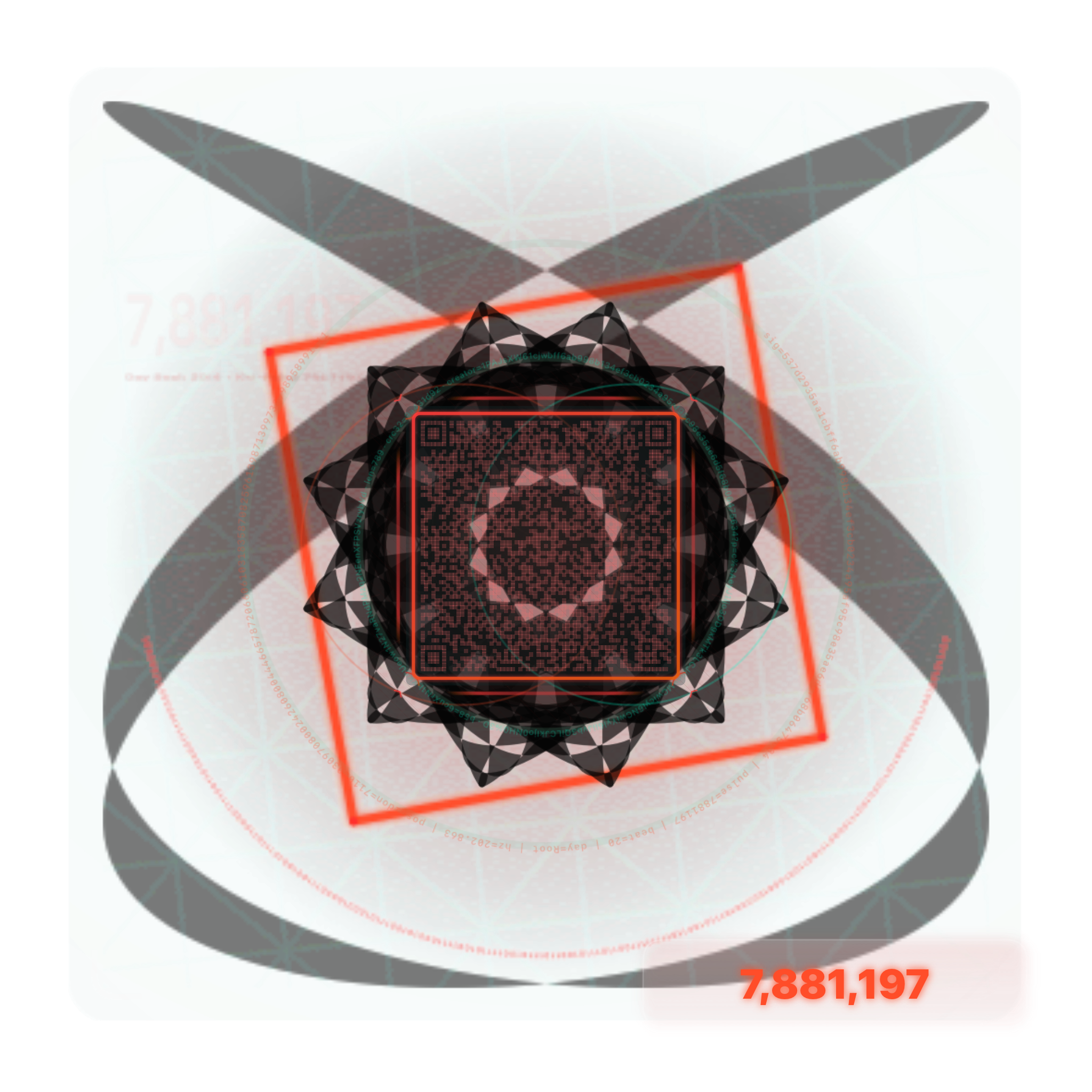
You are not late. You are right on pulse.