







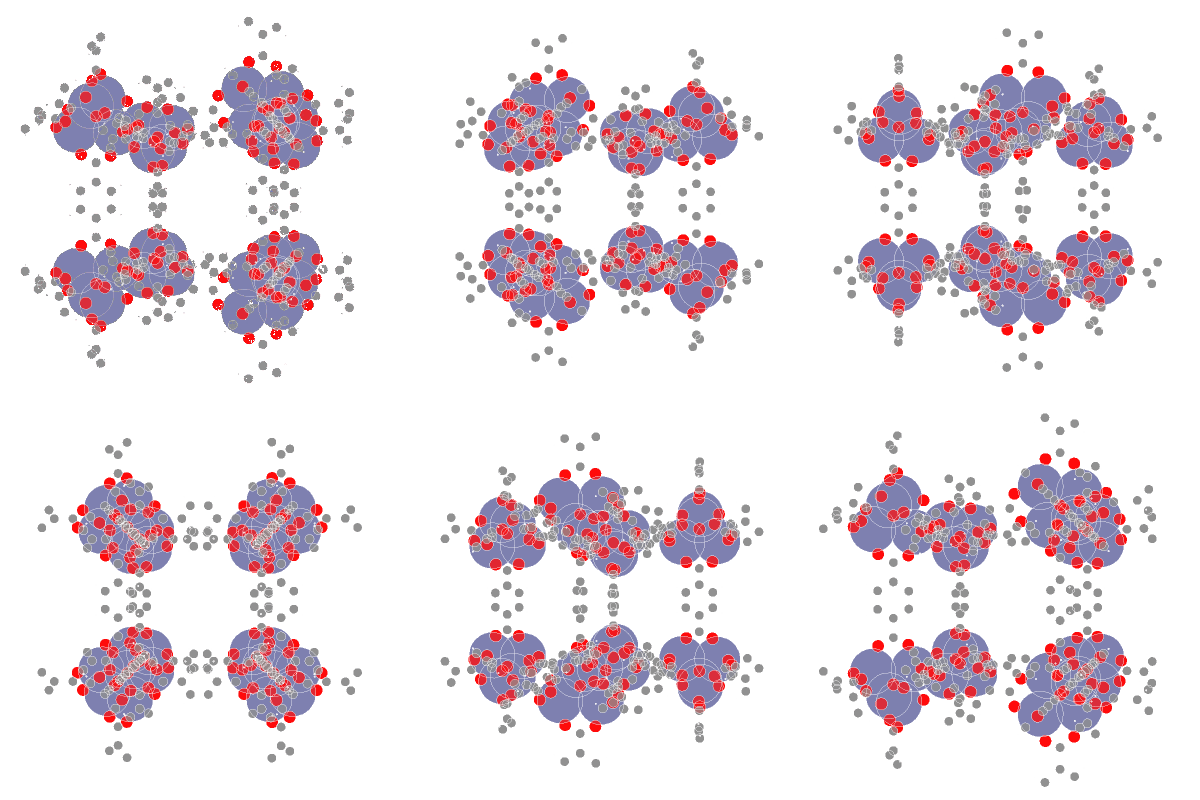
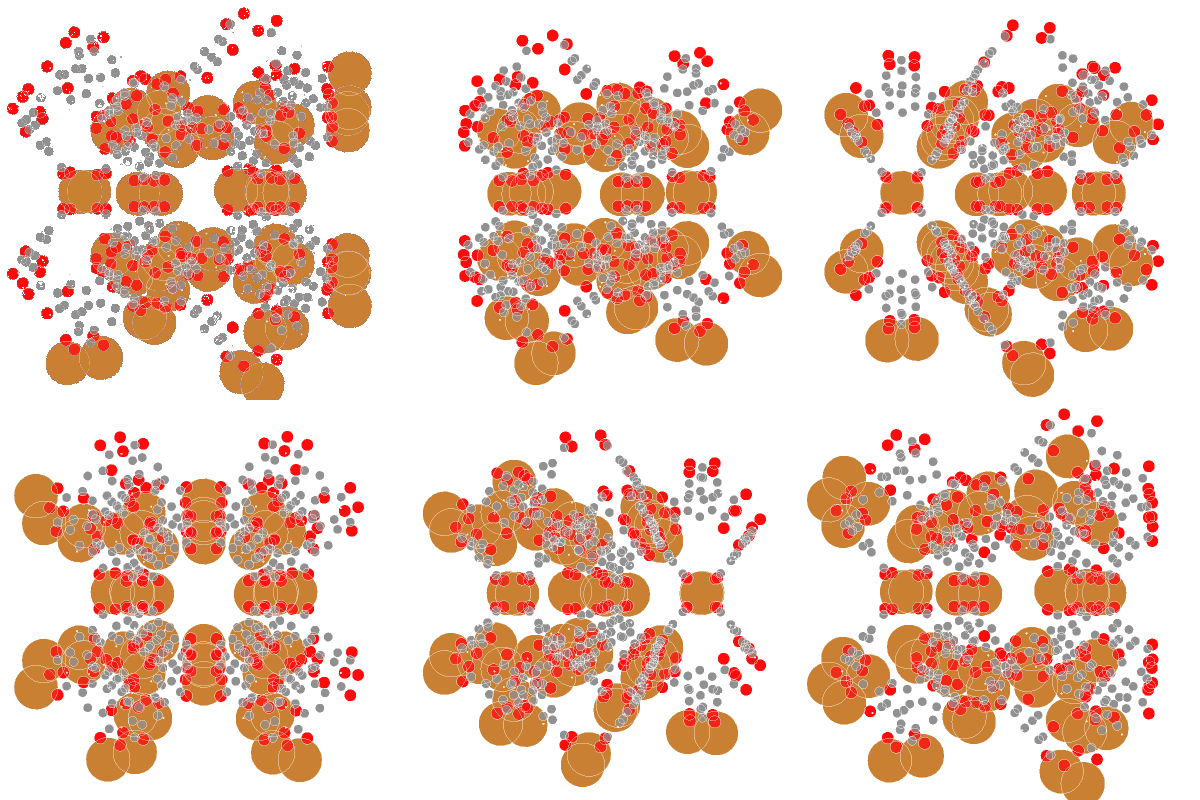
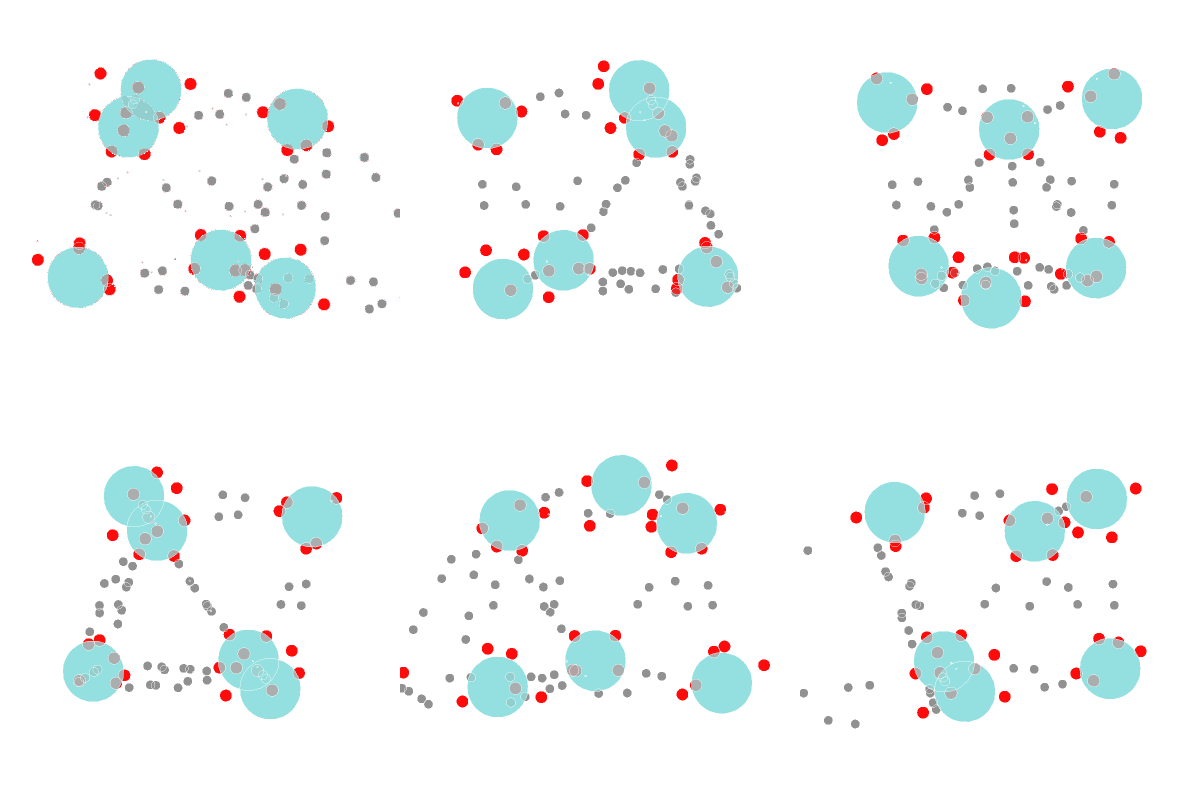
AIdsorb is a Python package for deep learning on molecular point clouds.
This package aims to provide a simple, easy-to-use and reproduce interface for:
-
📥 Creating molecular point clouds
-
🤖 Training DL algorithms on molecular point clouds
Important
It is strongly recommended to perform the installation inside a virtual environment.
Assuming an activated virtual environment:
pip install aidsorbNote
Refer to the 📚 Documentation for more information.
Here is a summary of what you can do from the command line:
-
Visualize a point cloud:
aidsorb visualize path/to/structure_or_pcd # Structure (.xyz, .cif, etc) or .npy -
Create and prepare point clouds:
aidsorb create path/to/structures path/to/pcd_data  # Create and store point clouds
aidsorb prepare path/to/pcd_data  # Split point clouds to train, valdation and test
-
Train and test a model:
aidsorb-lit fit --config=path/to/config.yaml
aidsorb-lit test --config=path/to/config.yaml --ckpt_path=path/to/ckpt
If you have any questions about how to use AIdsorb, we encourage you to post them in the 💬 Discussions section of the repository.
Note
Please make sure to read the documentation carefully first before asking your question.
We welcome contributions from the community! Please read our 🙌 Contributing Guidelines before submitting PRs or opening issues.
- To cite the software, please refer to the citation file or click the citation button.
- To cite the paper, please use the following BibTeX entry:
Show BibTex entry
@article{Sarikas2024,
  title = {Gas adsorption meets geometric deep learning: points, set and match},
  volume = {14},
  ISSN = {2045-2322},
  url = {http://dx.doi.org/10.1038/s41598-024-76319-8},
  DOI = {10.1038/s41598-024-76319-8},
  number = {1},
  journal = {Scientific Reports},
  publisher = {Springer Science and Business Media LLC},
  author = {Sarikas,  Antonios P. and Gkagkas,  Konstantinos and Froudakis,  George E.},
  year = {2024},
  month = nov
}AIdosrb is released under the GNU General Public License v3.0 only.