


- Problem Statement
- Our Solution
- Features
- System Architecture
- Hardware Components
- Software Requirements
- Installation Guide
- Circuit Diagram
- Cost Analysis
- Usage
- API Documentation
Asthma affects 7% of Bangladesh's population (approximately 11.9 million people), with particularly high prevalence among children and urban populations due to:
- High air pollution levels
- Dust and particulate matter
- High humidity (60-90% year-round)
- Rapid urbanization
| Challenge | Impact |
|---|---|
| Incorrect Usage Technique | 70% of patients use inhalers incorrectly, reducing medicine efficacy |
| Poor Adherence | 50% of patients miss doses or take incorrect dosages |
| No Digital Tracking | No way to monitor usage patterns or medication history |
| Environmental Correlation Gap | Cannot correlate attacks with environmental triggers |
| Untracked Emergencies | Emergency usage often goes unreported |
-
FindAir SmartHaler (€89/~$95)
- Still in testing phase
- Too expensive for Bangladesh market
- Limited availability
-
Smart Inhaler Add-on ($40)
- Not locally available
- Requires smartphone connectivity
- No environmental monitoring


A locally-manufactured, affordable IoT smart inhaler system designed specifically for Bangladesh's healthcare ecosystem.
- Affordable: Target price under $15 (BDT 1,800)
- Local Manufacturing: Can be produced in Bangladesh
- Environmental Monitoring: Real-time air quality tracking
- Offline Capability: Works without constant internet


- Puff Detection & Counting: Accurate force-sensitive resistor (FSR) based detection
- Real-time Web Dashboard: Monitor usage from any device
- Environmental Monitoring: Temperature, humidity, air quality, and pressure tracking
- Smart Medication Reminders: Customizable alerts for medication schedules
- Usage Analytics: 7-day history with graphical visualization
- Find My Inhaler: Buzzer and vibration for locating misplaced device
- Offline Data Storage: EEPROM-based storage for offline usage
- Auto Time Sync: NTP-based time synchronization
- Asthma Risk Assessment: Risk calculation using environmental factors
- WebSocket Real-time Updates: Live data streaming to connected devices
- Maximum Dosage Alerts: Warns when approaching daily limits
- Emergency Detection: Identifies unusual usage patterns
┌─────────────────────────────────────────────────────────┐
│                    Smart Inhaler Device                 │
├─────────────────────────────────────────────────────────┤
│  ┌──────────┐  ┌──────────┐  ┌──────────┐  ┌─────────┐  │
│  │   FSR    │  │  BME280  │  │  MQ-135  │  │  OLED   │  │
│  │ (Puff)   │  │(Env Data)│  │(Air Qual)│  │(Display)│  │
│  └────┬─────┘  └────┬─────┘  └────┬─────┘  └────┬────┘  │
│       │             │             │              │      │
│  ┌────▼─────────────▼─────────────▼──────────────▼────┐ │
│  │              ESP8266 NodeMCU                       │ │
│  │   ┌──────────────────────────────────────────┐     │ │
│  │   │ • Sensor Data Processing                 │     │ │
│  │   │ • Web Server (Port 80)                   │     │ │
│  │   │ • WebSocket Server (Port 81)             │     │ │
│  │   │ • EEPROM Storage Management              │     │ │
│  │   └──────────────────────────────────────────┘     │ │
│  └─────────────────────┬──────────────────────────────┘ │
│                        │                                │
└────────────────────────┼────────────────────────────────┘
                         │
                    WiFi │ 802.11 b/g/n
                         │
           ┌─────────────▼──────────────┐
           │      Local Network         │
           │   ┌──────────────────┐     │
           │   │   Web Interface  │     │
           │   │  (Responsive UI) │     │
           │   └──────────────────┘     │
           └────────────────────────────┘
| Component | Model | Quantity | Purpose | Approx. Cost (BDT) |
|---|---|---|---|---|
| Microcontroller | ESP8266 NodeMCU | 1 | Main processor with WiFi | 650 |
| Force Sensor | FSR 402 | 1 | Puff detection | 645 |
| Environmental Sensor | BME280 | 1 | Temp, humidity, pressure | 490 |
| Air Quality Sensor | MQ-135 | 1 | Air quality monitoring | 174 |
| Display | 0.96" OLED I2C | 1 | Local display | 290 |
| RTC Module | DS3231 | 1 | Time keeping | 250 |
| Buzzer | Active 5V | 1 | Audio alerts | 50 |
| Vibration Motor | 3V Mini | 1 | Haptic feedback | 100 |
| Resistor | 10kΩ | 1 | Pull-down for FSR | 5 |
| Wires & PCB | - | - | Connections | 200 |
| Enclosure | 3D Printed | 1 | Device housing | 200 |
| Battery | Li-Po 3.7V 1000mAh | 1 | Power supply | 250 |
Total Development Cost: ~BDT 3500 ($29.50)
ESP8266 NodeMCU Pin Configuration:
━━━━━━━━━━━━━━━━━━━━━━━━━━━━━━━━
A0  ← FSR (with 10kΩ pull-down to GND)
D1  → I2C SCL (BME280, OLED, RTC)
D2  → I2C SDA (BME280, OLED, RTC)
D5  ← MQ-135 Digital Output
D6  → Buzzer Signal
D7  → Vibration Motor Signal
3V3 → Power for I2C devices
5V  → Power for MQ-135
GND → Common Ground
- Arduino IDE v1.8.19 or higher
- ESP8266 Board Package
// Install via Arduino Library Manager:
ESP8266WiFi         // Built-in
ESP8266WebServer    // Built-in
WebSocketsServer    // v2.3.6 by Markus Sattler
Wire                // Built-in
Adafruit_Sensor     // v1.1.4
Adafruit_BME280     // v2.2.2
RTClib              // v2.0.3
Adafruit_GFX        // v1.11.3
Adafruit_SSD1306    // v2.5.7
ArduinoJson         // v6.19.4
NTPClient           // v3.2.1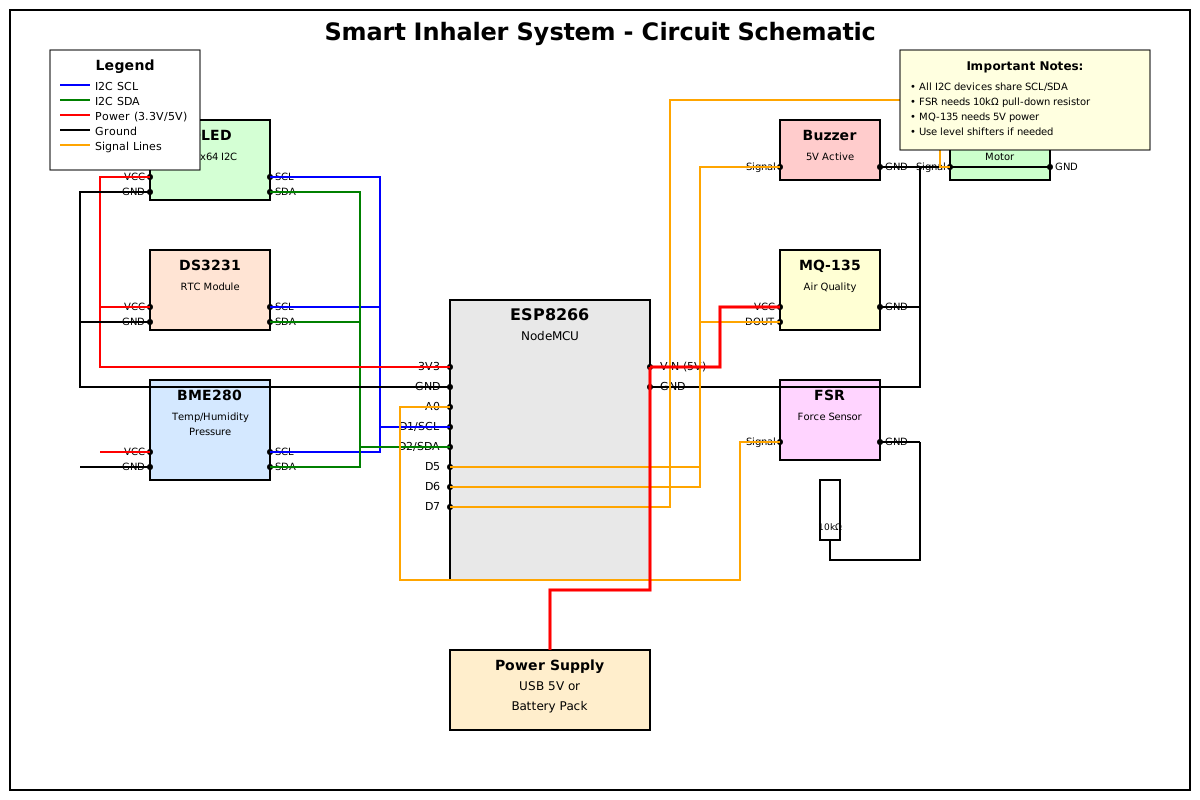
- Assemble components according to the circuit diagram
- Ensure all I2C devices have unique addresses:
- BME280: 0x76 or 0x77
- OLED: 0x3C
- RTC: 0x68
# Clone the repository
git clone https://github.com/WinTer1165/Digital-Inhaler.git
cd digital-inhaler/smartinhaler

# Open in Arduino IDE
# File → Open → SmartInhaler.inoEdit config.h to set your WiFi credentials:
const char* WIFI_SSID = "Set_WiFi_Name";
const char* WIFI_PASSWORD = "Set_WiFi_Password";- Select Board:
Tools → Board → NodeMCU 1.0 (ESP-12E Module) - Select Port:
Tools → Port → COMx(or/dev/ttyUSBxon Linux) - Click Upload
- Open Serial Monitor (115200 baud)
- Note the IP address displayed
- Open browser and navigate to:
http://[IP_ADDRESS]
See the included circuit schematic for detailed wiring instructions. Key connections:
- All I2C devices share SCL (D1) and SDA (D2) lines
- FSR requires a 10kΩ pull-down resistor
- MQ-135 requires 5V power supply
- Use level shifters if needed for 5V/3.3V compatibility
| Category | Cost (BDT) | Cost (USD) |
|---|---|---|
| Components | 3,600 | $30.00 |
| Assembly | 400 | $3.33 |
| Total | 4000 | $33.33 |
| Category | Cost (BDT) | Cost (USD) |
|---|---|---|
| Components (bulk) | 800 | $6.66 |
| PCB (mass production) | 100 | $0.83 |
| Injection molding | 100 | $0.83 |
| Assembly | 50 | $0.41 |
| Total | 1,050 | $8.73 |
| Product | Price | Availability | Features |
|---|---|---|---|
| Our Solution | $8-15 | Local | Full environmental monitoring |
| FindAir SmartHaler | $95 | Import only | Limited features |
| Generic Add-on | $40 | Not available | Basic tracking only |
- Power on the device
- Connect to WiFi network (automatic)
- Access web dashboard
- Set medication reminders
- Configure max puff limits
- Normal Use: Simply use the inhaler as usual - puffs are automatically detected
- Check Stats: View daily/weekly usage on OLED display
- Web Dashboard: Access detailed analytics from any device
- Reminders: Device will buzz/vibrate at medication times
// Sensor Data Update
{
  "type": "sensorData",
  "temperature": 25.5,
  "humidity": 65,
  "airQuality": 85,
  "pressure": 1013,
  "totalPuffs": 120,
  "dailyPuffs": 4
}

// Puff Detected
{
  "type": "puffDetected",
  "totalPuffs": 121,
  "timestamp": "14:23:45"
}// Set Reminder
{
"command": "setReminder",
"index": 0,
"hour": 8,
"minute": 30,
"label": "Morning dose"
}
// Reset Counter
{
"command": "resetPuffs"
}
// Get Usage History
{
"command": "getHistory"
}